Archive for July, 2007

Exhibition Opens!

Wednesday, July 25th, 2007

Maverick Machines opened on Monday evening, with a wonderful opening speech by Timothy O’Shea, Principle of the University of Edinburgh. Tim recounted anecdotes of the time he had invited Pask up to Edinburgh in the 1970’s, bringing the spirit of Pask very much to life.

Timothy mentioned that many of Pask’s machines were truly maverick, malfunctioned and were unreliable - and as if Pask’s spirit was in the exhibition, two reliable displays that had been working for the preceding two days suddenly malfunctioned and stopped working….

The opening was a great success full of animated discussions, interactions and conversations.

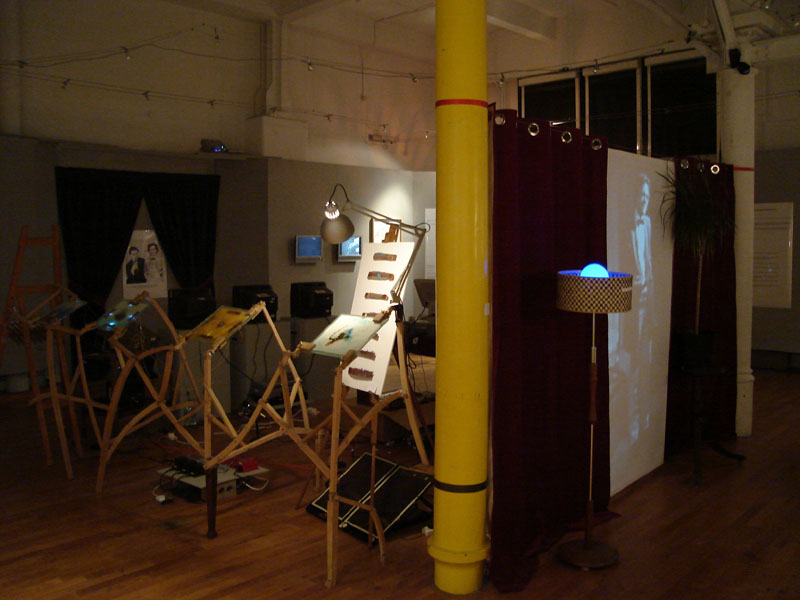
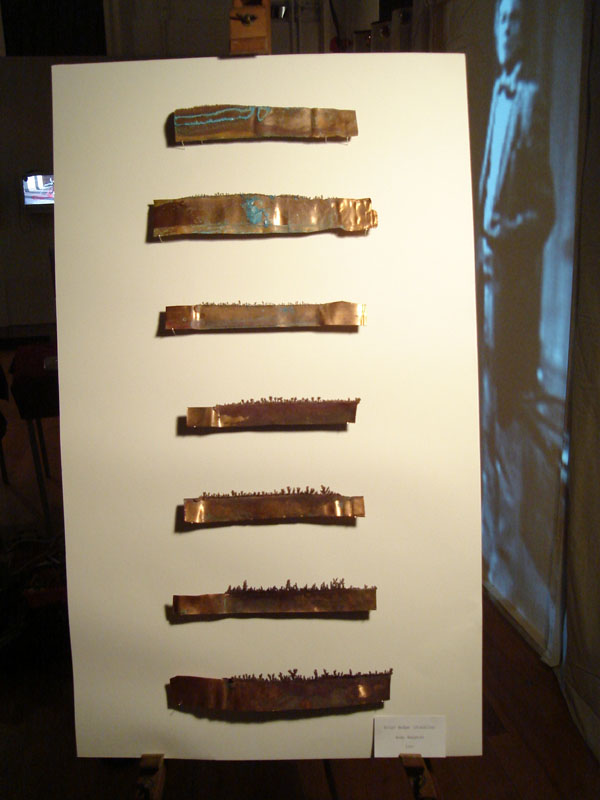
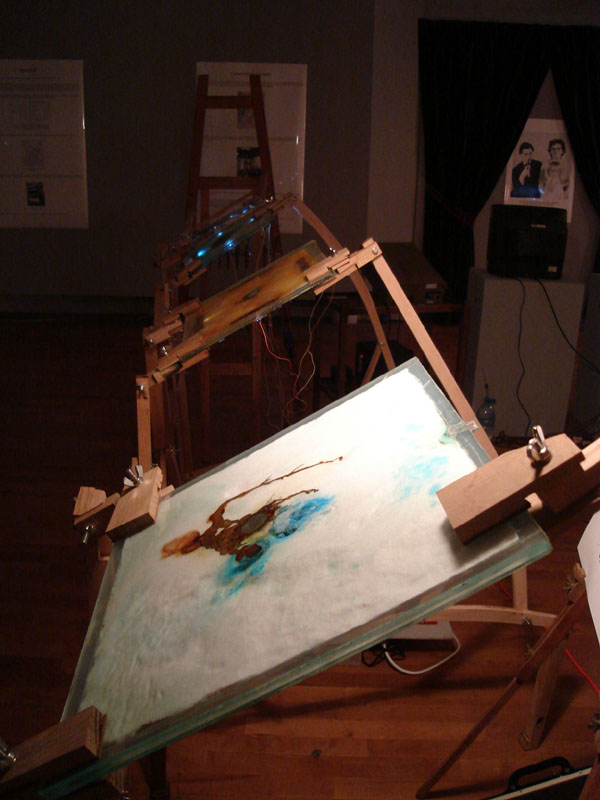
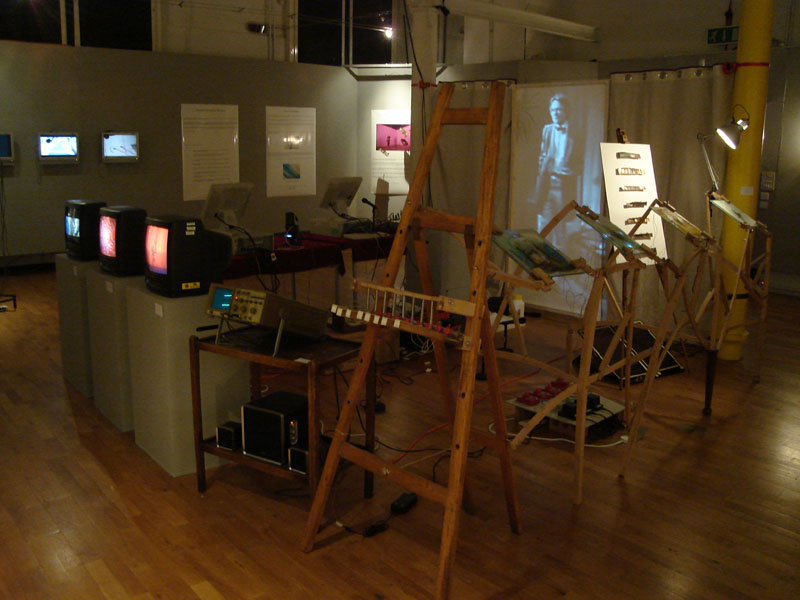
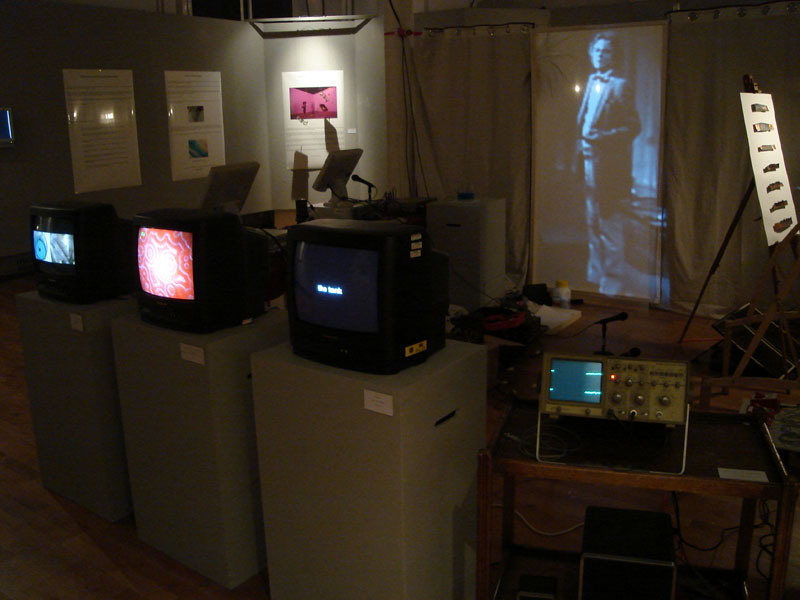
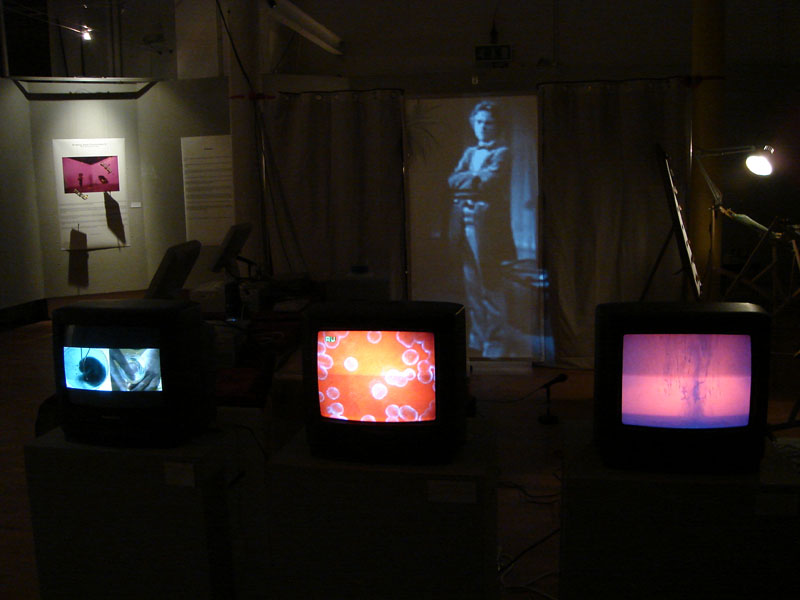
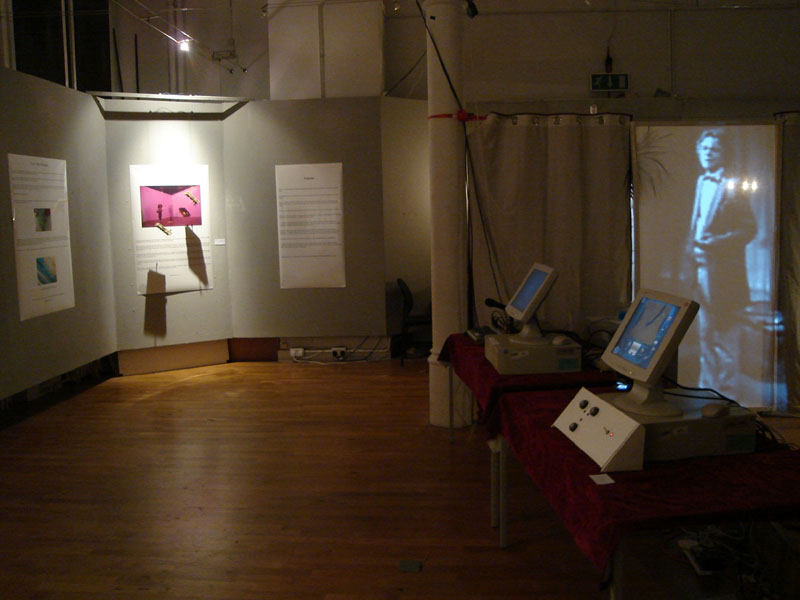
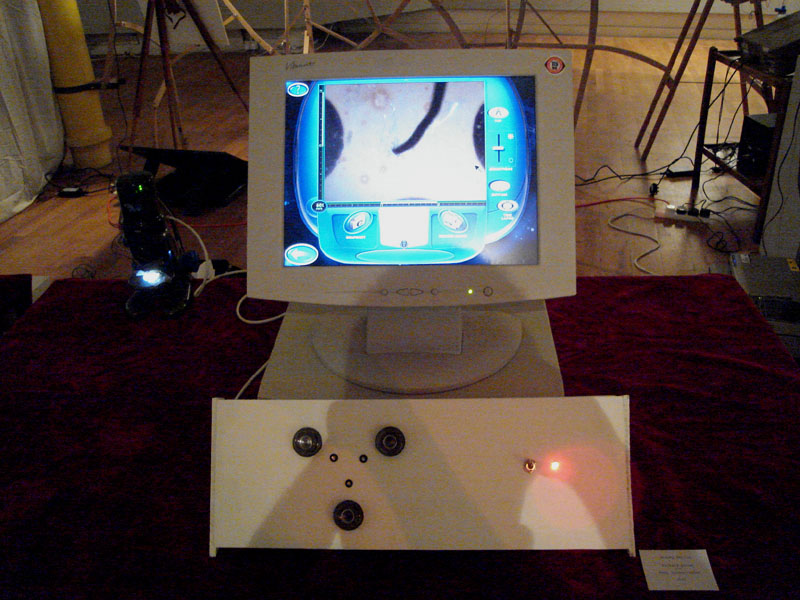
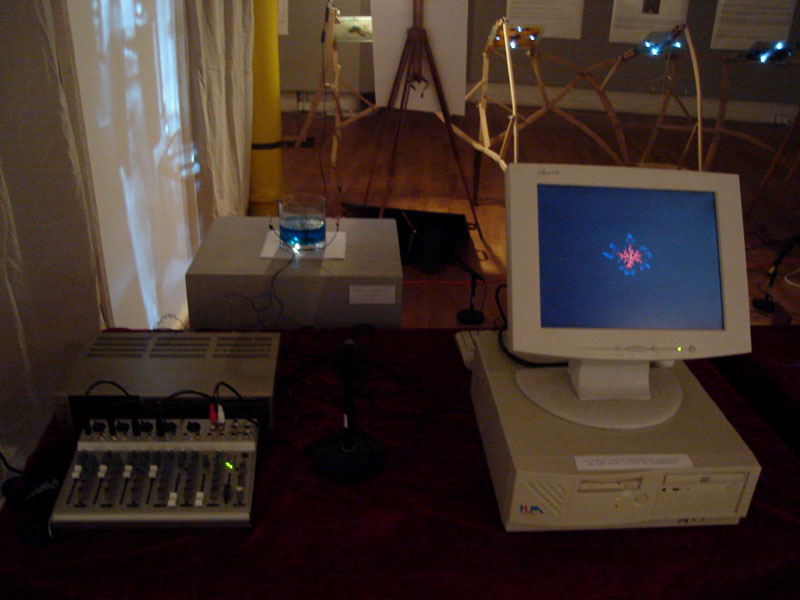
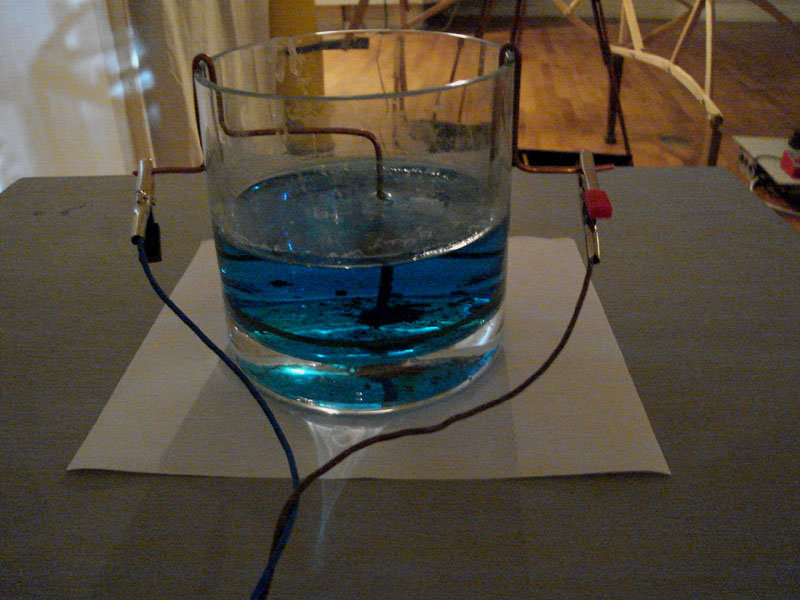
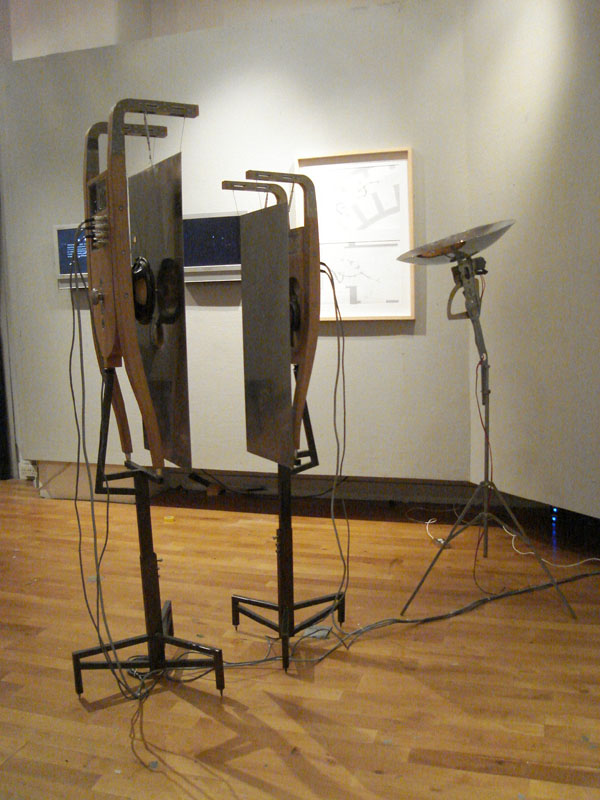
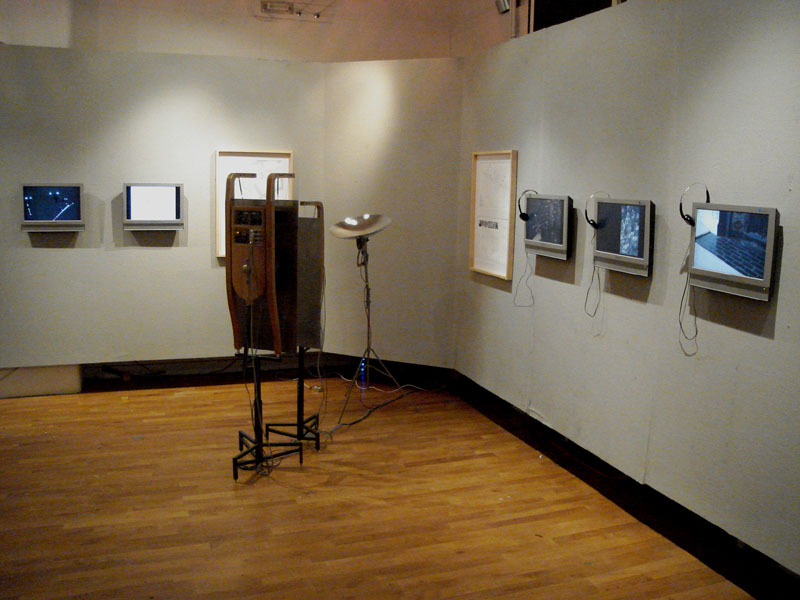
Below are a series of photographs of the exhibition, commencing from the entrance and moving clockwise around the space.

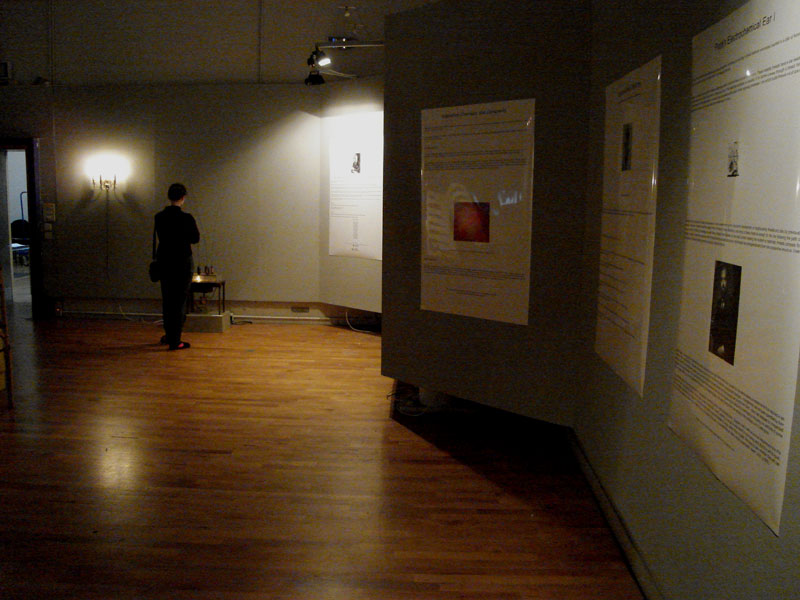
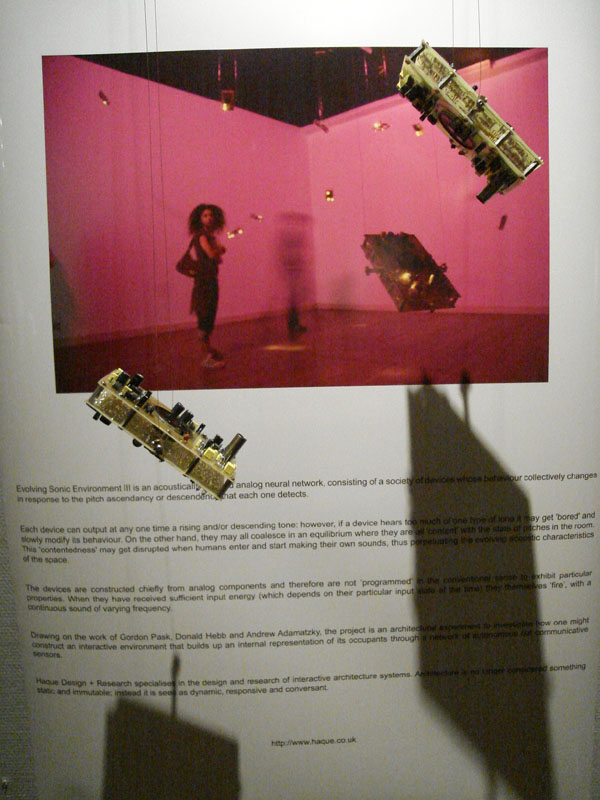
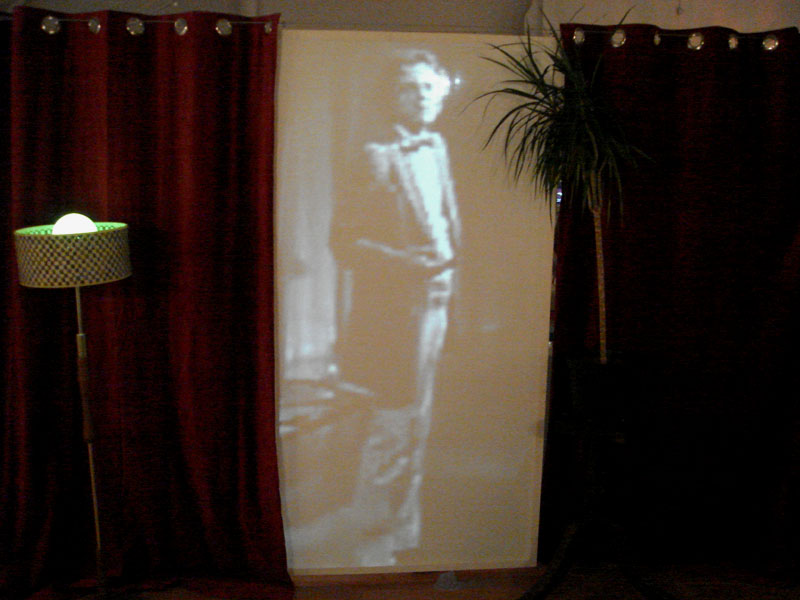
Entrance to Exhibition PIR Illuminated Posters Central Area Solar Stacking Electrochemical Glasses E-Synthesiser E-Synth Oscilloscope & DVD’s Three Videos Central right side of exhibition Axon Technologies Memory Device Sound-Generated Thread System, DLA Simulation Close up - two Days of audio stimulation Hearing a Reality Video works from Bartlett Evolving Sonic Environment III Sensitive Light, velvet curtains and plant

More to follow..
Exhibition Papers

Tuesday, July 24th, 2007

A number of papers are now available for download that document different aspects of the Maverick Machines exhibition.

Colloquy of Mobiles, an installation Pask exhibited at Cybernetic Serendipity, 1968, ICA, London. Image taken from page 97 of: Gordon Pask, A Comment a Case History and a Plan. In (editor) J. Reichardt, Cybernetics, Art and Idea, Studio Vista London, pp. 76-99, 1971, Colloquy of Mobiles

Peter Cariani has kindly allowed us to use excerpts from his seminal paper on Pask’s electrochemical experiments.

Pask’s Ear and Biological Creativity by Peter Cariani

The papers by Stephen Gage and Usman Haque explore the influence of Pask’s research on architecture. Pask collaborated with Cedric Price on the Fun Palace in the 1960s (which unfortuantely never came to fruition) and with John Frazer in the 1980s at the Architecture Association and his influence continues. Several pieces of Pask-inspired work from the Bartlett Interactive Architecture Workshop are on show in the exhibition. Usman is also exhibiting work that demonstrates the continuing relevance of Pask’s ideas.

The Bartlett Interactive Architecture Workshop by Stephen Gage

Gordon Pask and Architecture by Usman Haque

George Mallen and David Powell describe their memories of Gordon Pask. George worked for seven years at Pask’s company, System Research Ltd. David was a contemporary of Pask’s at Rydal school and recounts his memory of Pask’s contribution (as a school boy) to the war effort.

Recollections of Working with Gordon Pask by George Mallen

A Distant Memory of Gordon Pask by David Powell

Ranulph Glanville describes the influence of Pask on five of his machines. Andy Webster details some artistic projects that have been directly inspired by Pask’s electrochemical research and which are being exhibited as part of Maverick Machines.

Five Machines and One Pask by Ranulph Glanville

Paskian Pieces by Andy Webster

Cybernetic Serendipity book cover The cover of J. Reichardt (editor), Cybernetic Serendipity: the Computer and the Arts, Frederick Praegaer, 1969. This book describes the seminal exhibition at the ICA, London, curated by Jasia Reichardt in 1968.

Jon Bird and Ezequiel DiPaolo describe how Pask’s electrochemical research was part of a broader research goal, shared with cybernetician Stafford Beer, of finding a suitable ‘fabric’ or substrate for building maverick machines. They emphasise the radical nature of Pask’s approach by comparing it to contemporary research into adaptive behaviour.

Maverick Fabrics by Jon Bird and Ezequiel DiPaolo

Tim O’Shea gave a talk at the opening of the exhibition where he recounted how he had invited Gordon Pask to come at speak when he was a post doctoral researcher at the University of Edinburgh and how he benefitted greatly from talking one on one with Pask. However, his colleagues could not understand Pask’s talk and his credibility went down - fortunately, his career recovered as he is now Principal of the university (although he has not returned to the hotel where he took Pask for breakfast…).

Maverick Machines Exhibition Opening Speech by Tim O’Shea

Hearing a Reality

Monday, July 16th, 2007

aerial-view.jpg

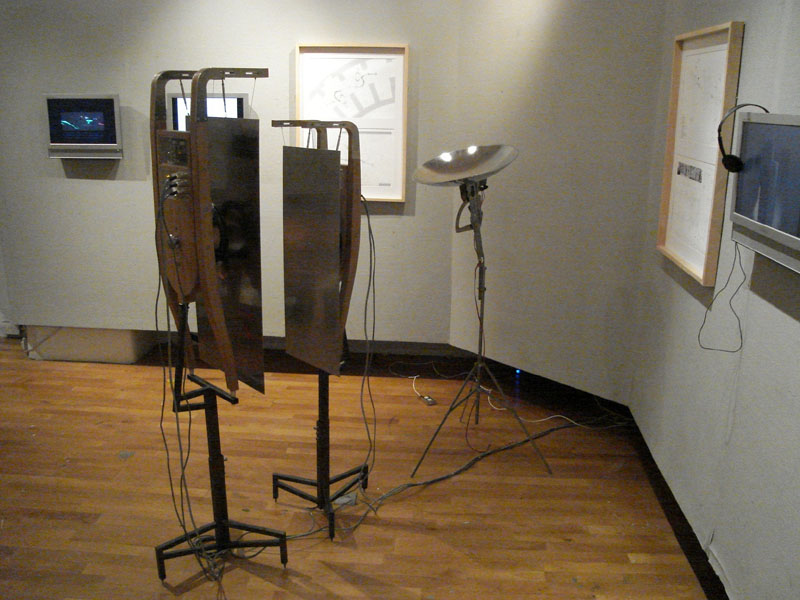
This electro-acoustic system has been developed to explore the sonic properties of an environment, and reveal the way in which sound and space co-habit one another. The system uses speakers and panels of resonating metal and gains its input and mode of operation through the cyclical feedback of sound waves from the environment in which it is placed.  One sheet of metal (the speaker panel) is made to vibrate by the sound waves received up by a second sheet of metal (the pickup panel) placed nearby. The system is connected in a loop, so that the sounds that the pickup panel receives are amplified, and reproduced by the speaker panel to be received up by the pickup panel again. The system operates in this cyclical way; the sounds that it produces are determined by the resonance of the metal panels and the acoustic properties of the environment in which the machine is placed.  The machine is extremely reactive and capable of changing in real-time to anything that alters the acoustic properties of the environment that it exists within. Through this work the artist discovered that sound is an effective method with which one can explore first and second order cybernetic principles, and that the inclusion of an observer within the system parallels the work of Gordon Pask.

Richard Roberts can be contacted by email: richardroberts@oink.co.uk 

Dendritics I, II and III

Wednesday, July 11th, 2007

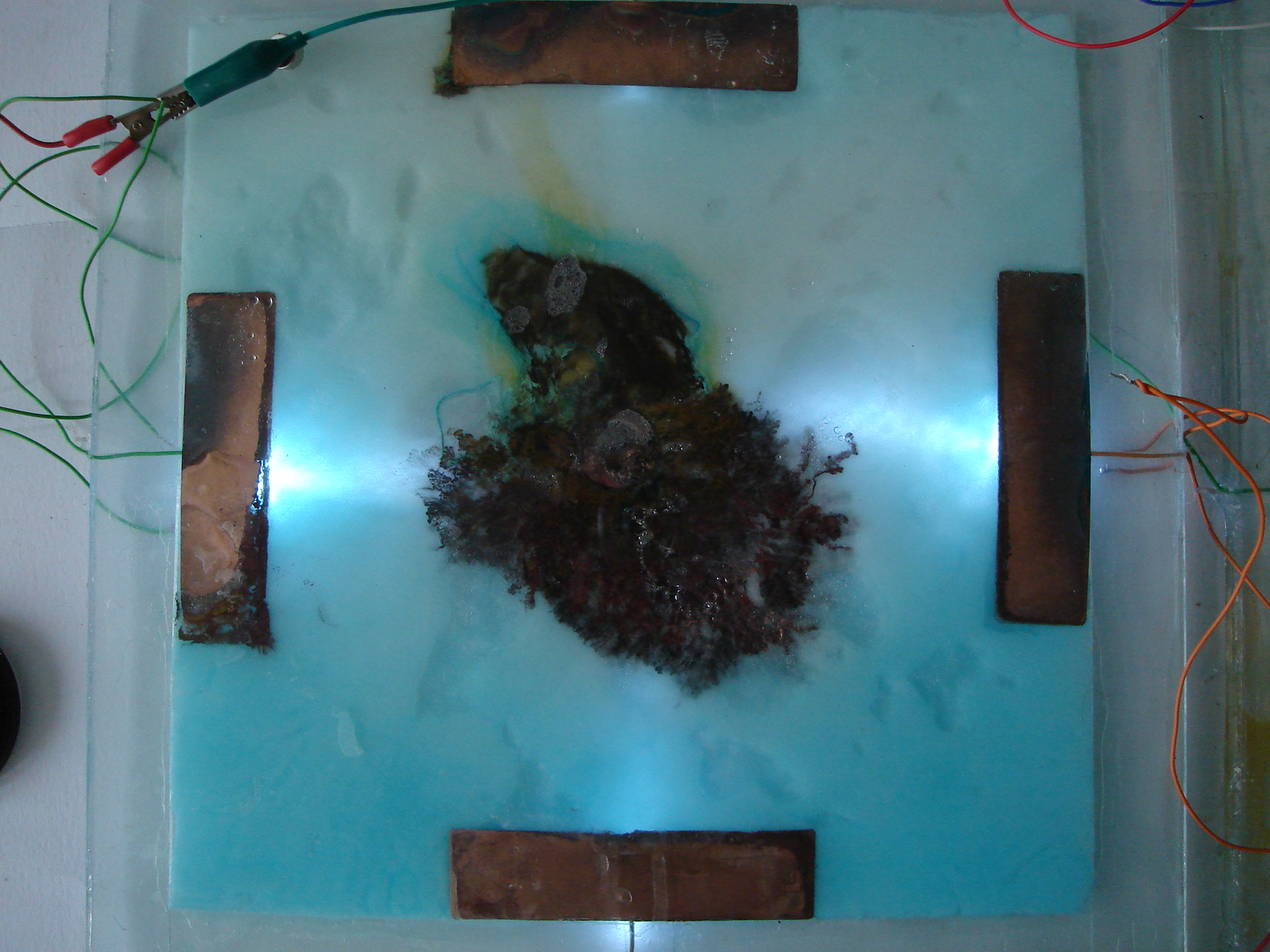
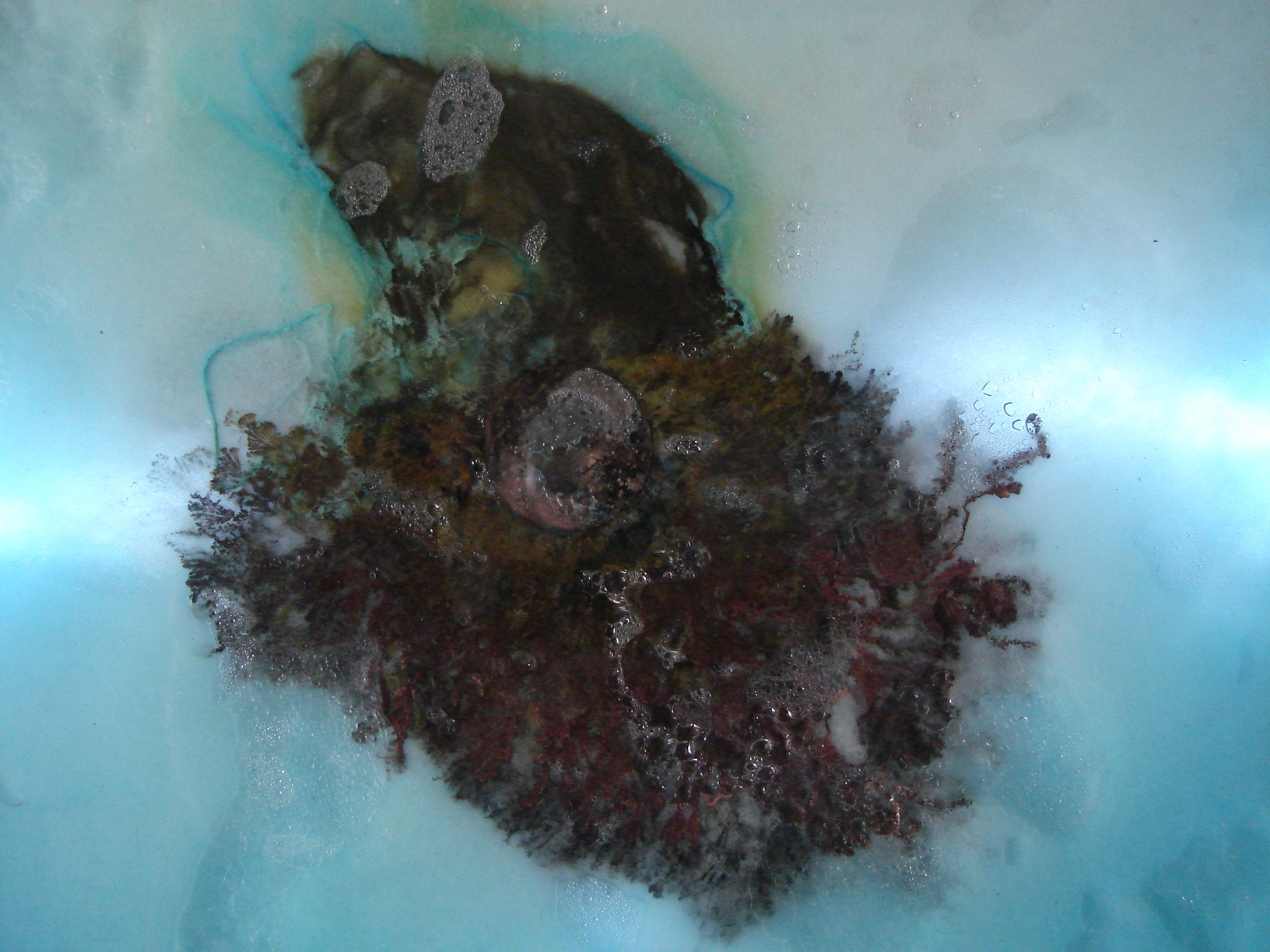
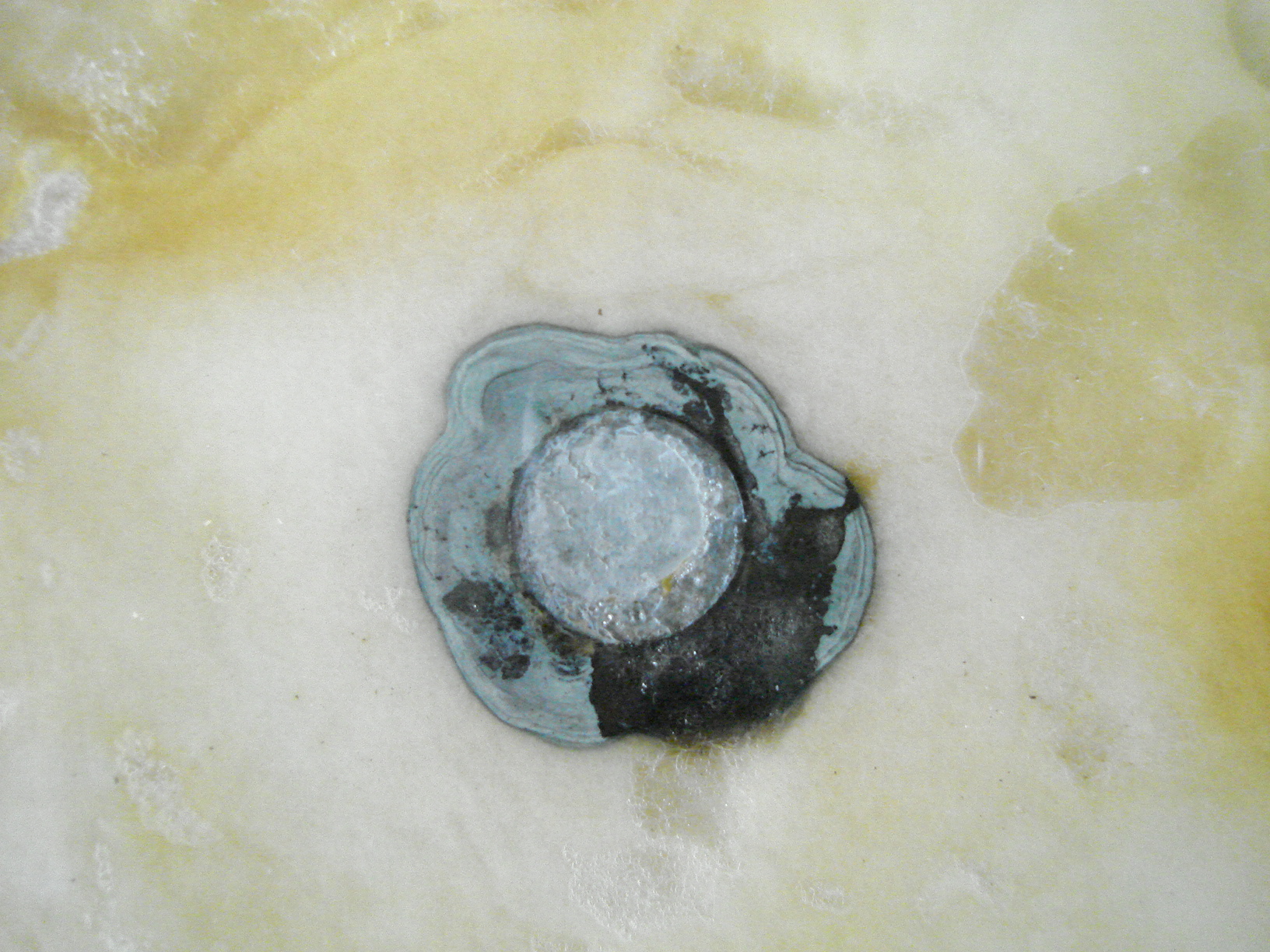
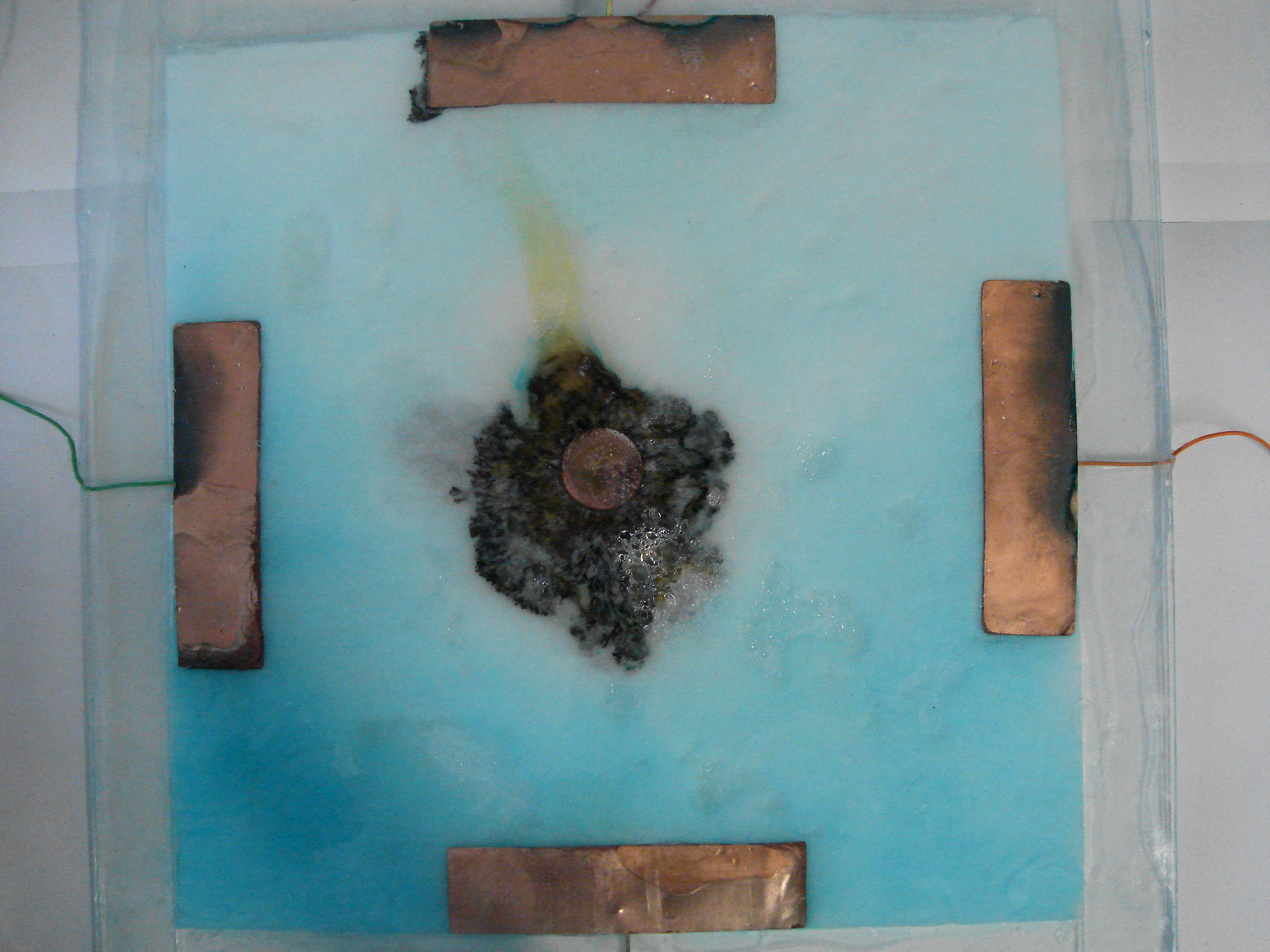
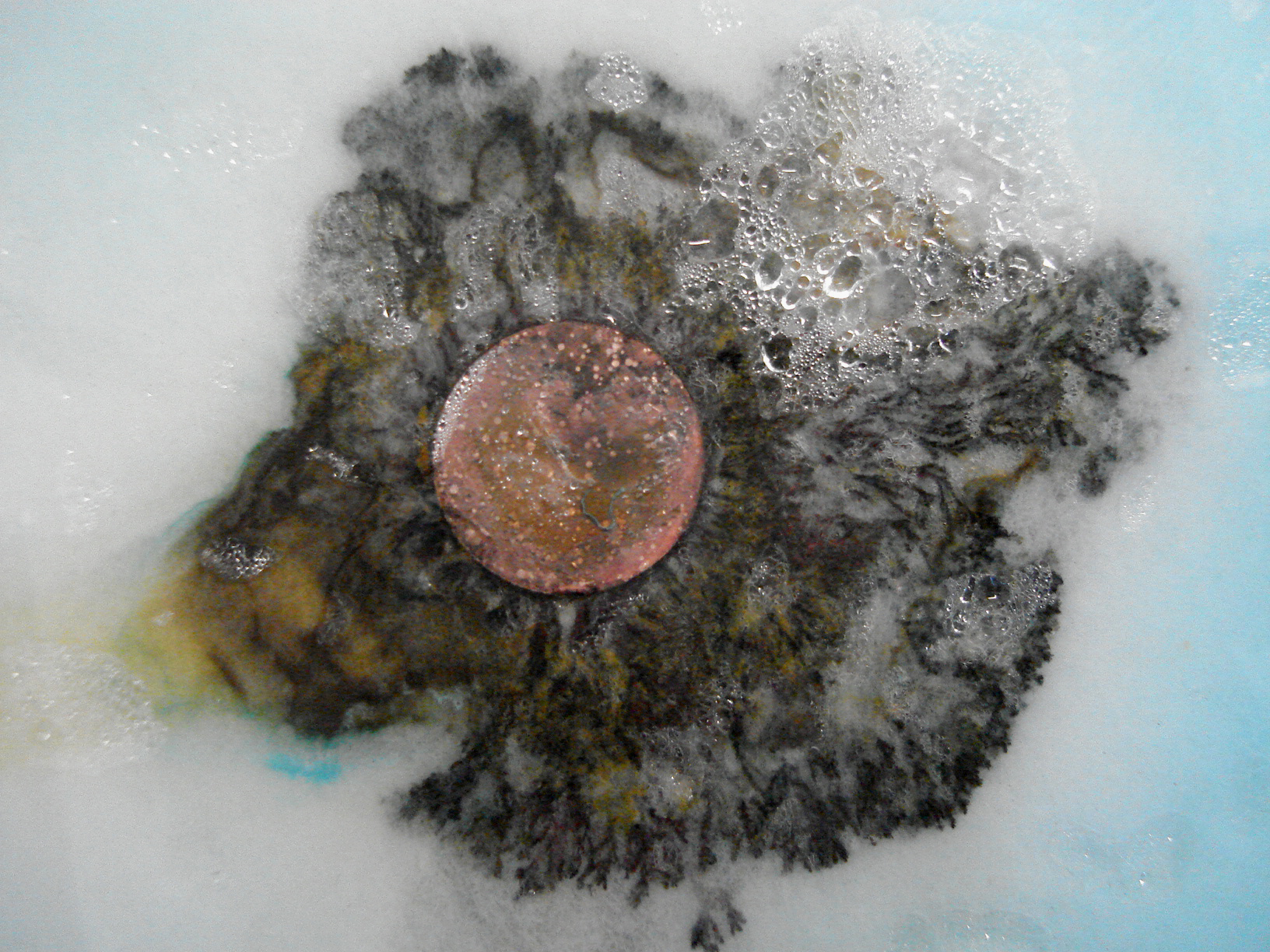
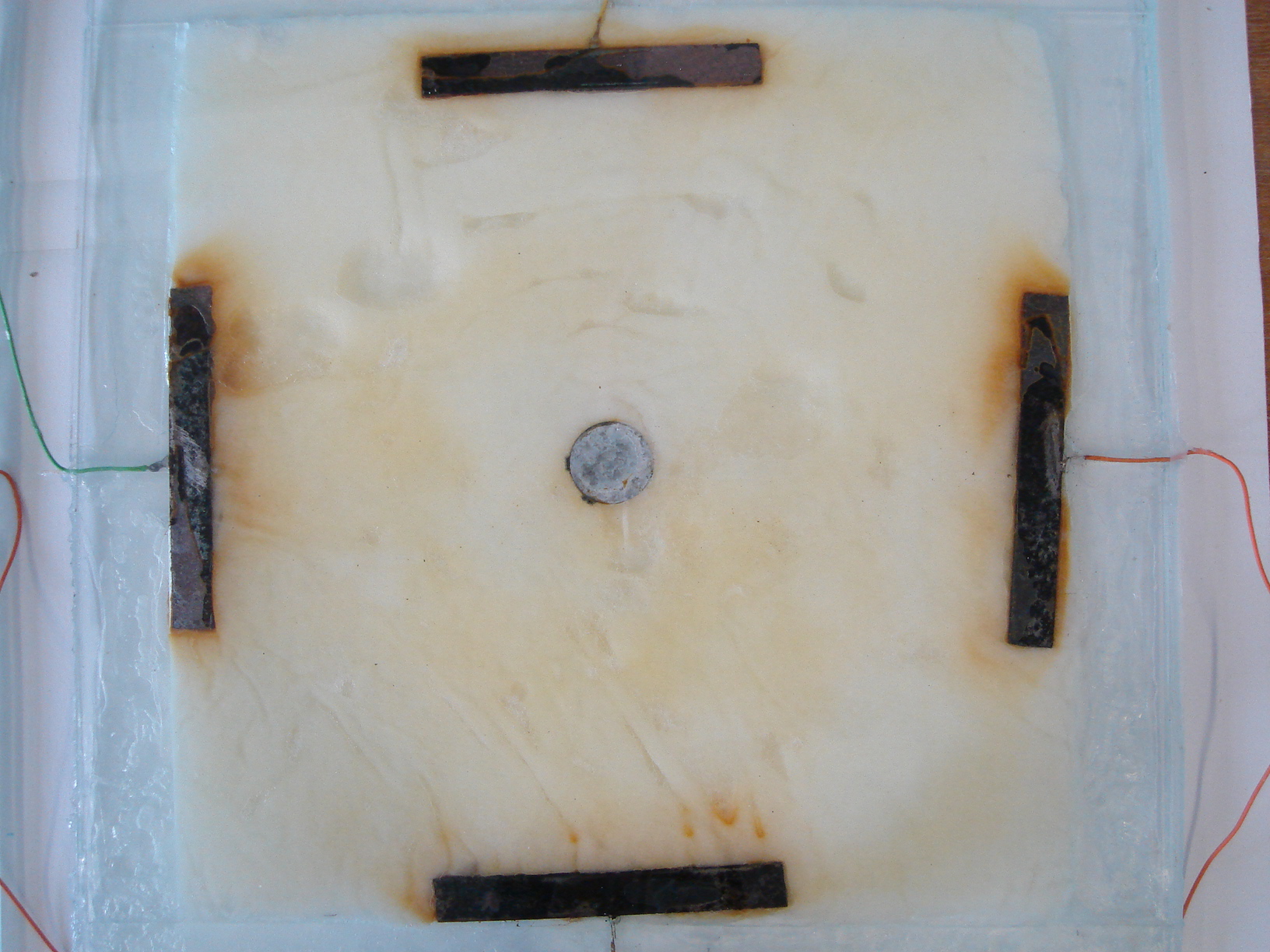
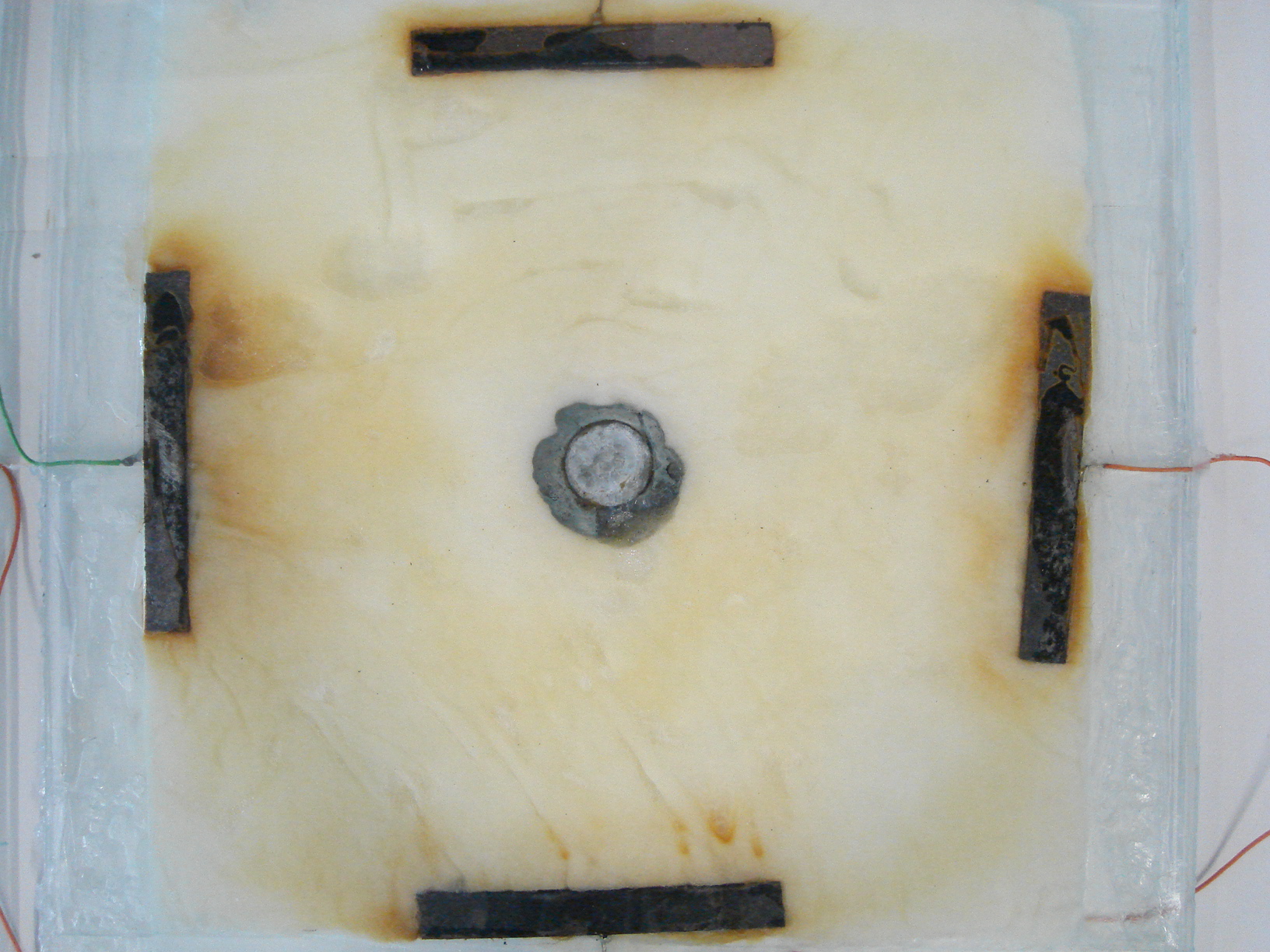
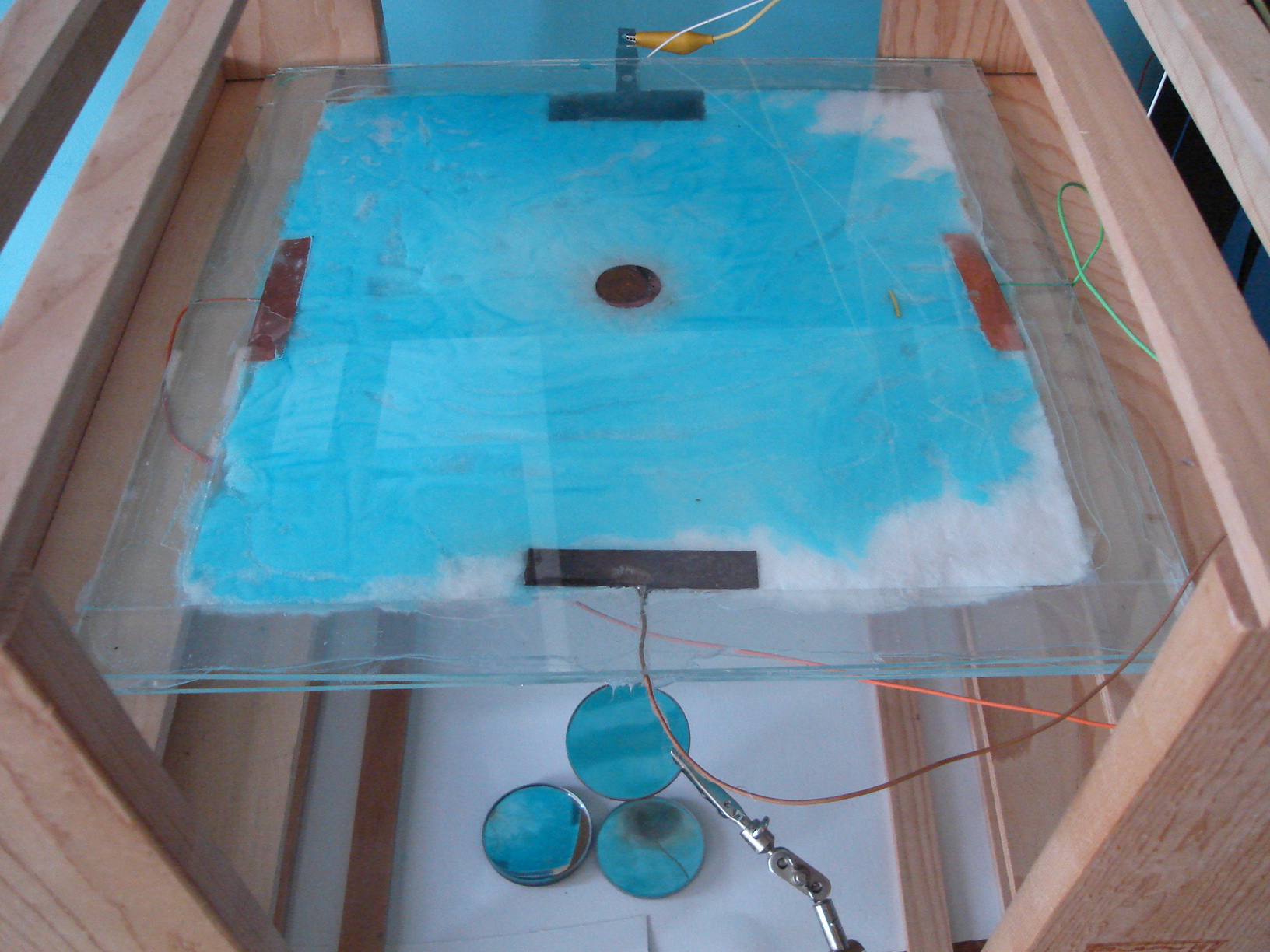
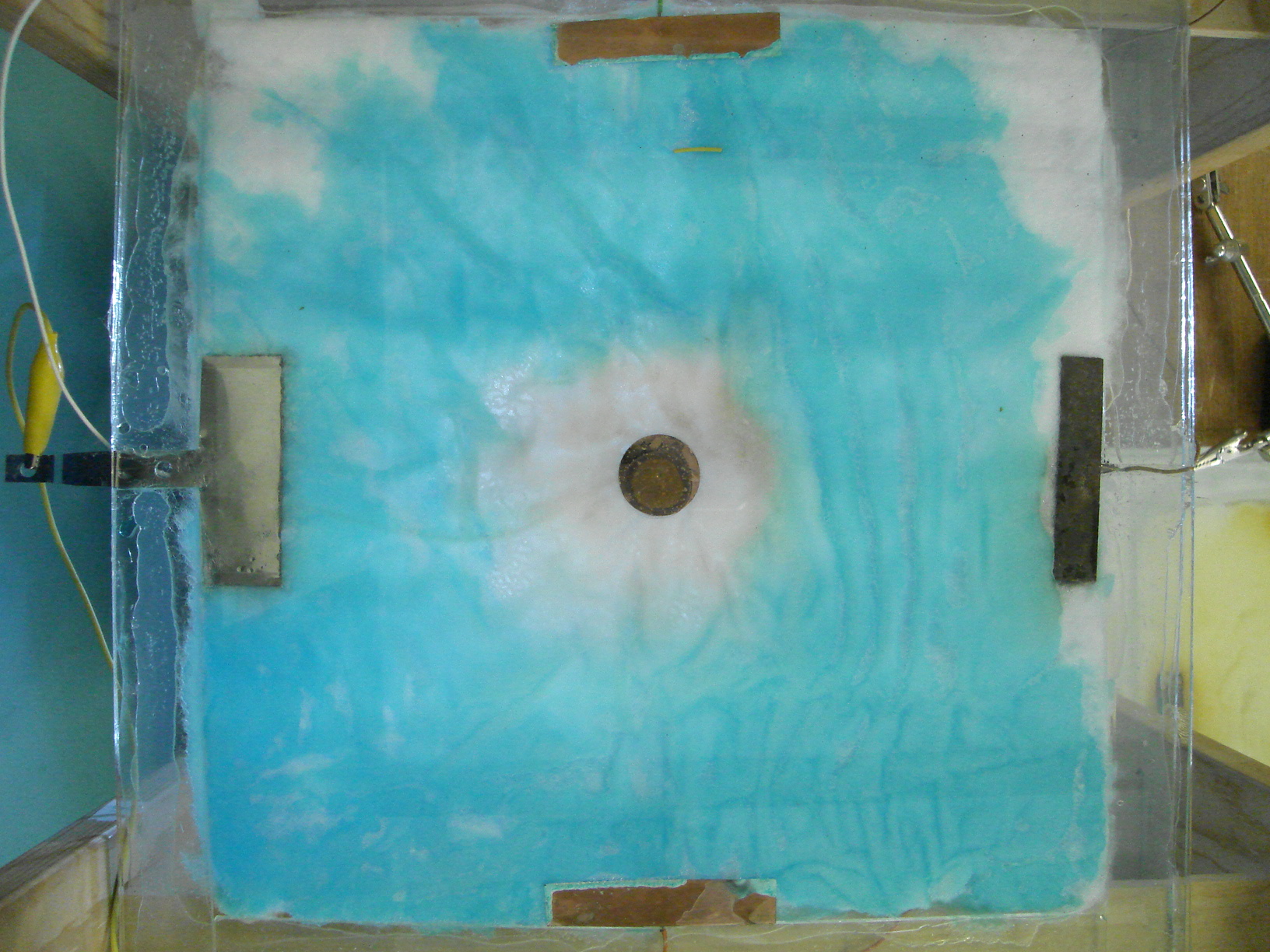
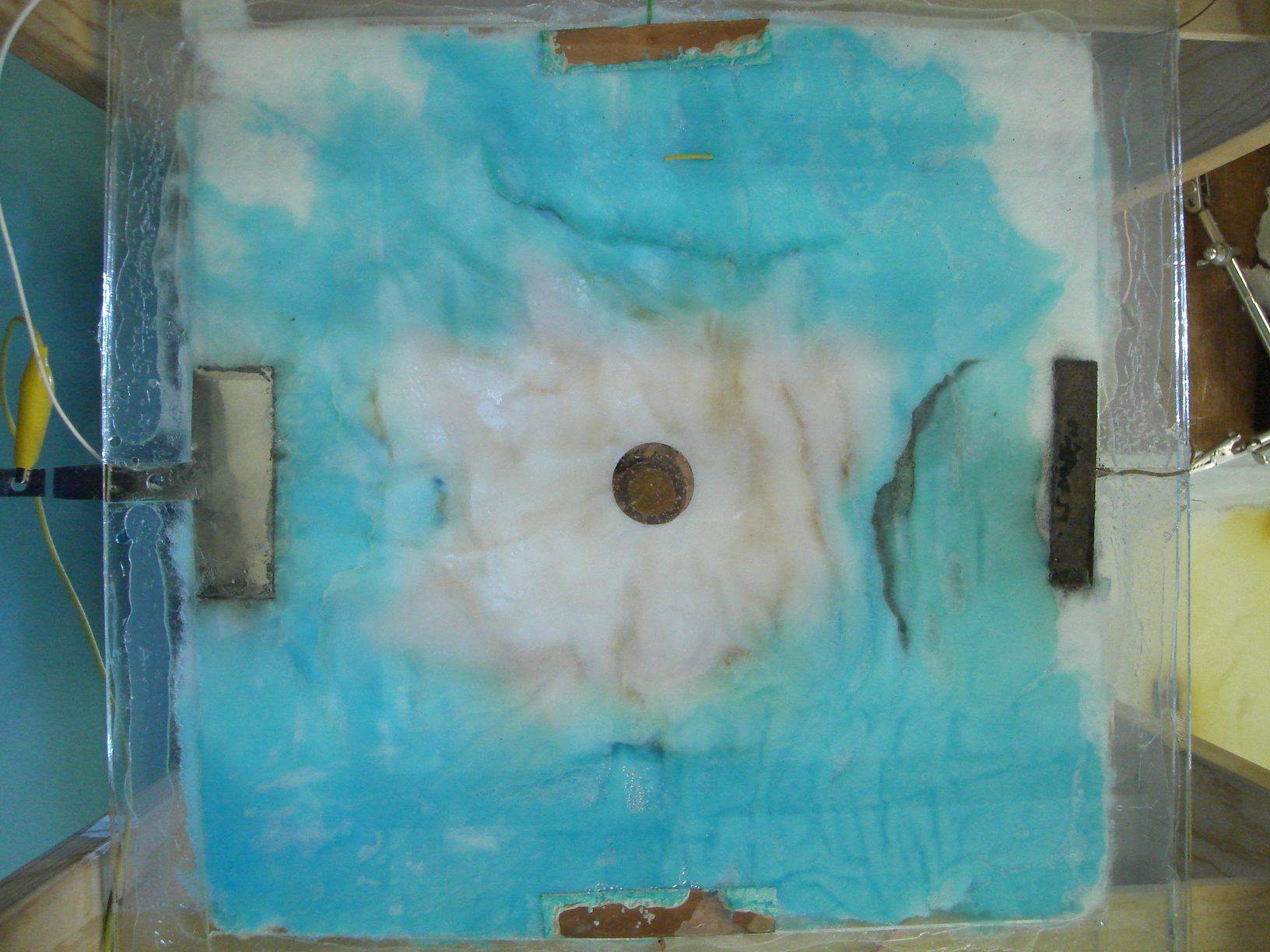
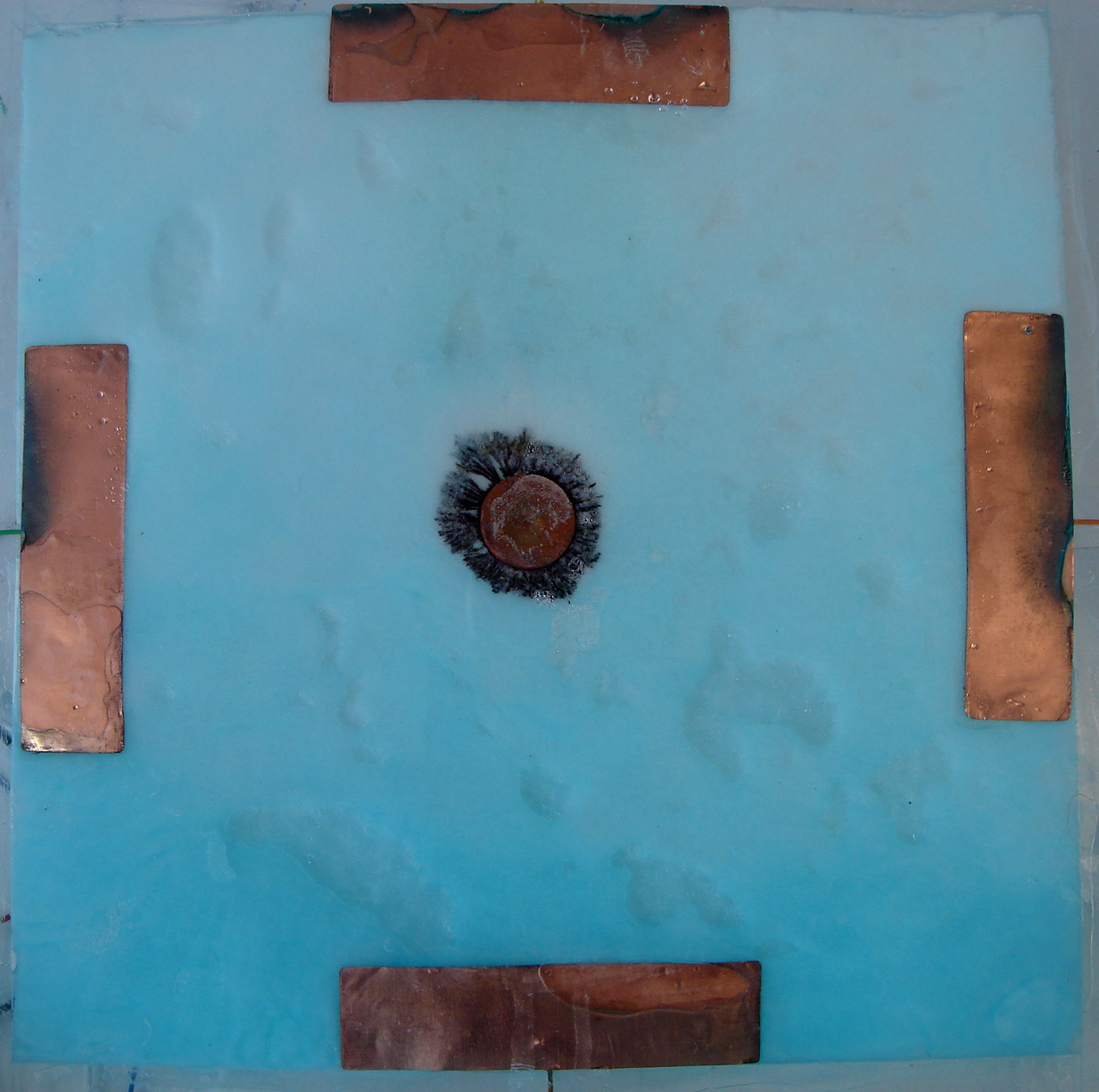
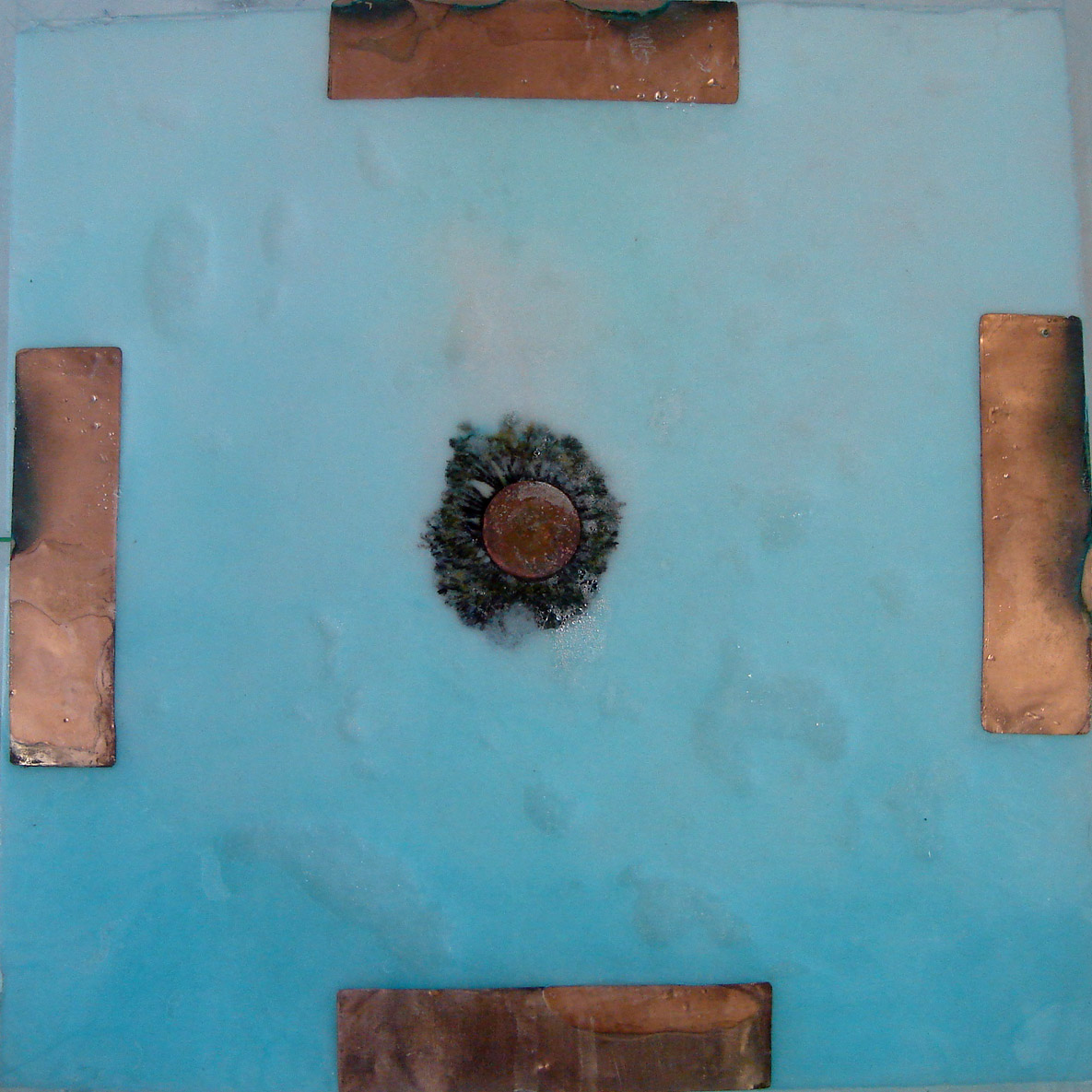
The Copper dendrite glass is evolving slowly, with beautiful jewel fern formations at the edges. I have added white LED’s to the circuit for illumination and a visual indication of the current, which is likely to increase dramatically as the dendrites reach the outer electrodes.

copper-led-10july.JPG copper-led-close-10july.JPG

The Iron version has not produced any dendritic growth, just a slowly expanding amoebic form around the central negative electrode..

dsc00856.JPG

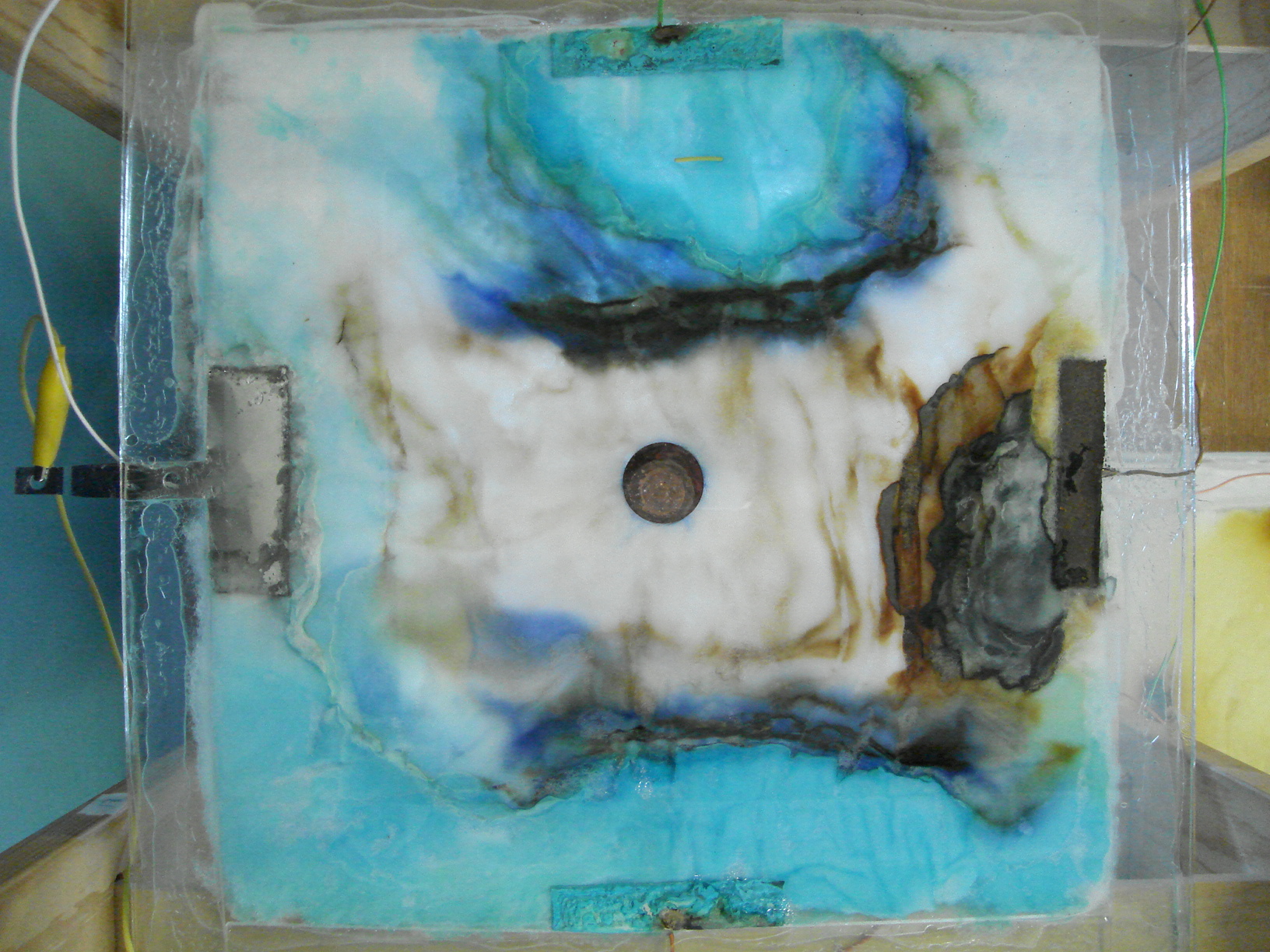
The Mixed Salts Glass is producing quite a colour range, indicating the flows and reactions of the salts and metals under the electric fields.

diii01-21.JPG

Dendritic Glasses II & III

Saturday, July 7th, 2007

The dendritic process slows down as the dendrite grows, occupying more fractal space and requiring more current.

Dendritic Glass I (Cu, CuSO4) is still growing (when fed current) since my previous post.

s1c-14.JPG close4c.JPG

underclose1.JPG
Underneath the glass..

Dendritic Glass II - Iron and Ferrous Sulphate Solution, and Dendritic Glass III - Al, CU, Fe + MPG have been created and are in the process of growth and time-lapse recording:

dsc00768.JPG dsc00776.JPG

Dendritic Glass III - Al, Cu, Fe + mixed salts (inspired by Electrochemical Glass)

diii-setup.JPG

diii01-1.JPG ..+3hrs.. diii01-7.JPG

Dendritic Glass

Wednesday, July 4th, 2007

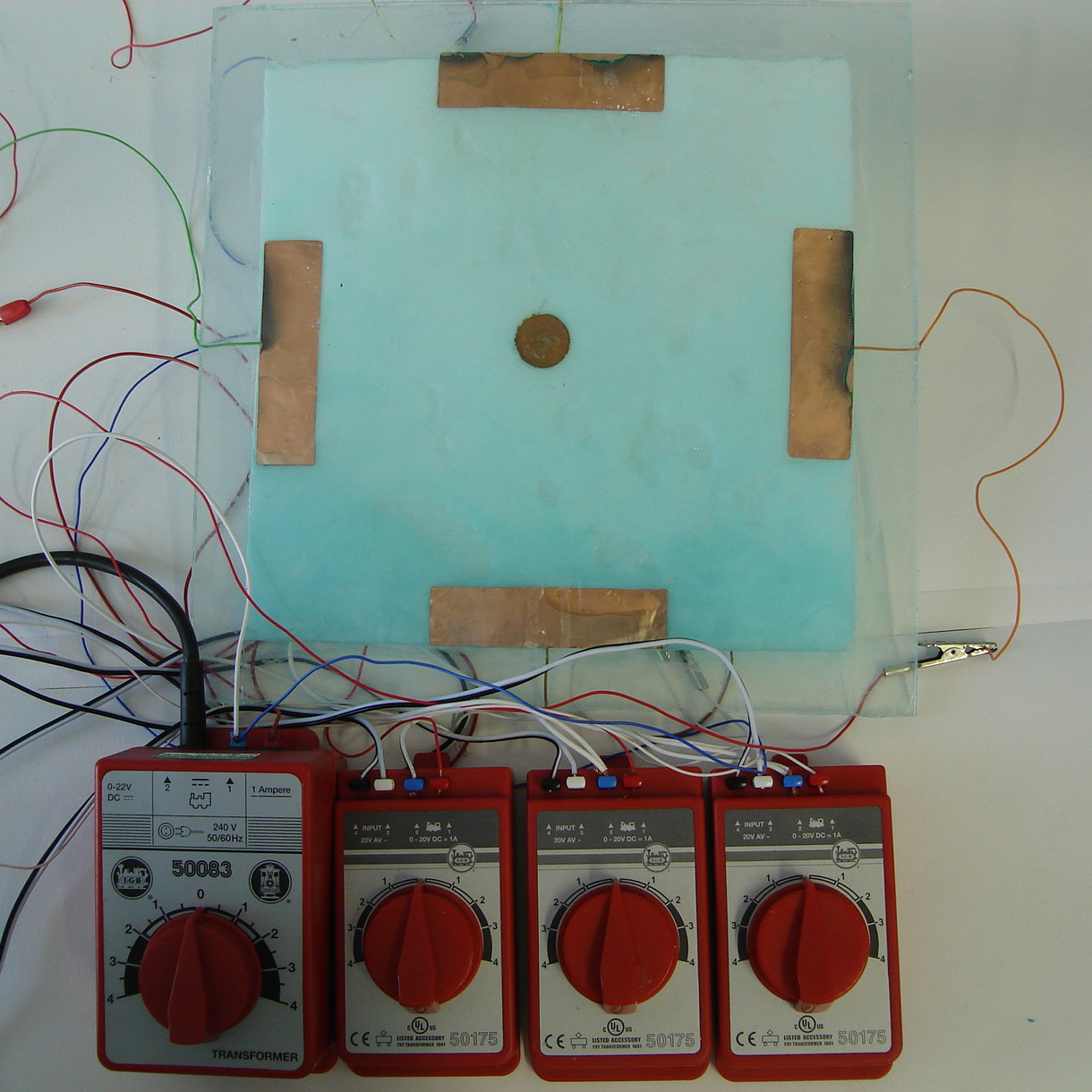
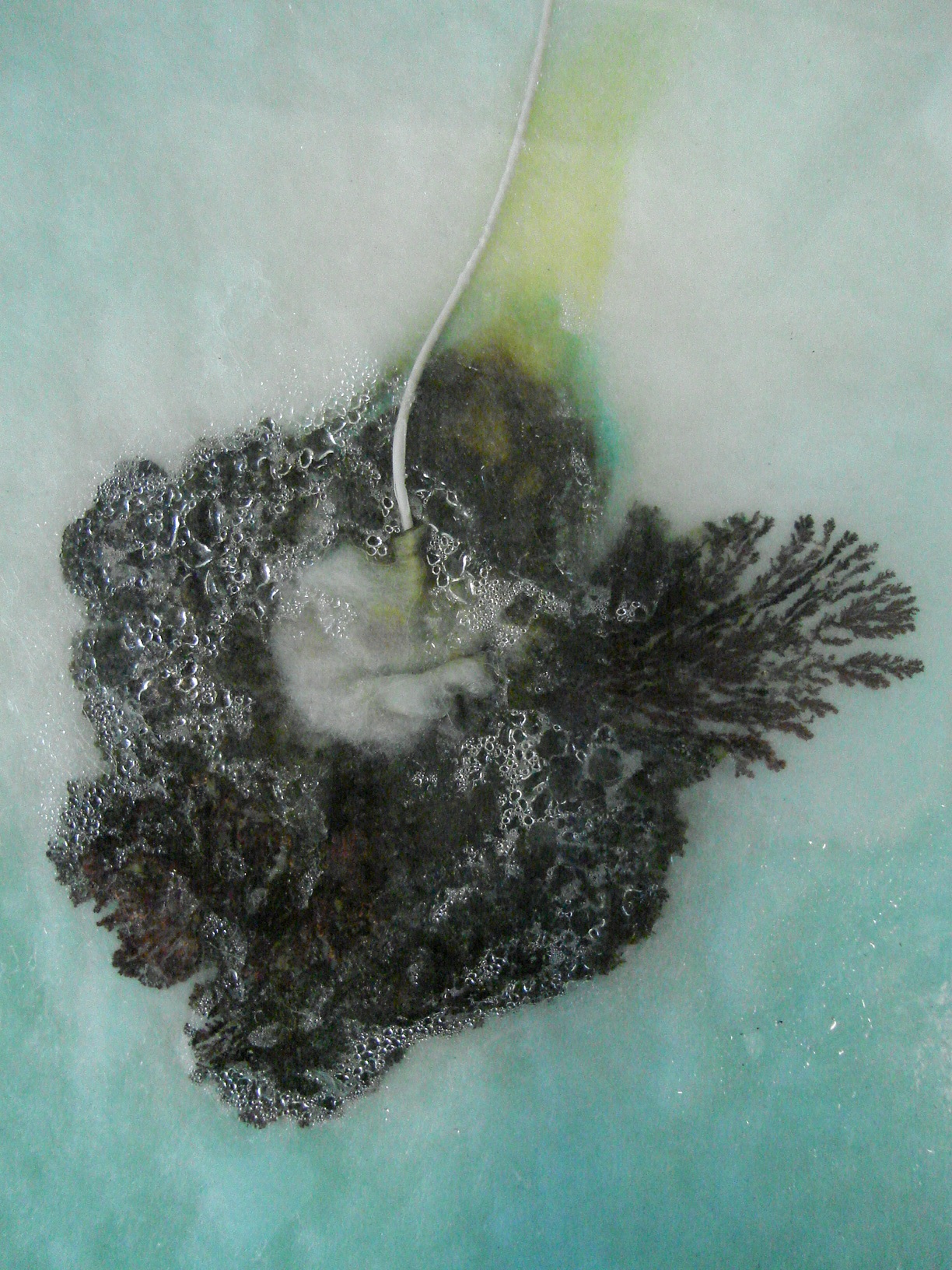
This work represents a macro version (12″ square) of the demonstrator electrochemical glass slide from Axon Technologies, also to be featured in the exhibition.

The central electrode is set to -V, whilst the outer ones are at 24V+. The dendrite grows out form the centre producing tree like formations (plus steamy atmosphere due to heating effect). The time between each image is approximately 1 hour, by the end of today I hope to have a fully grown dendrite.

By changing the relative voltages of the 4 outer plates, it should be possible to steer and shape the dendritic growth.

e4chem01.JPG e4chem02bc.JPG e4chem03bc.JPG

Exhibition Layout

Sunday, July 1st, 2007

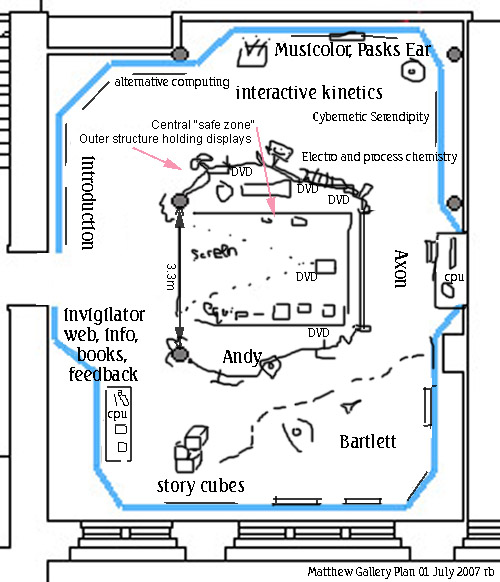
Approximate layout of the space:

plan2.JPG